How to Prepare a Room for Decorating in West Yorkshire
Get a flawless painted finish every time. Our room preparation guide for West Yorkshire homeowners covers walls, surfaces, filling, sanding and more.

How to prepare a room for decorating in West Yorkshire
Preparation is where a great decorating job is won or lost. You can use the finest paint and the steadiest hand, but if the surface underneath is dusty, greasy, cracked or poorly filled, the finish will show it.
Many people spend time choosing the perfect colour, then rush the prep, and the result disappoints: paint lifts at the edges, brush marks show and old cracks reappear. This guide walks you through the general preparation for decorating a room, from clearing the space to the final wipe-down before the first coat. Whether you are handing the job to a decorator or doing some of it yourself beforehand, this is what matters. Exquisite Detail Decorating Services offers premium painting and decorating across West Yorkshire and surrounding areas, with attention to every detail.
Clear and protect the room
Before anything touches a wall, the room needs to be ready to work in.
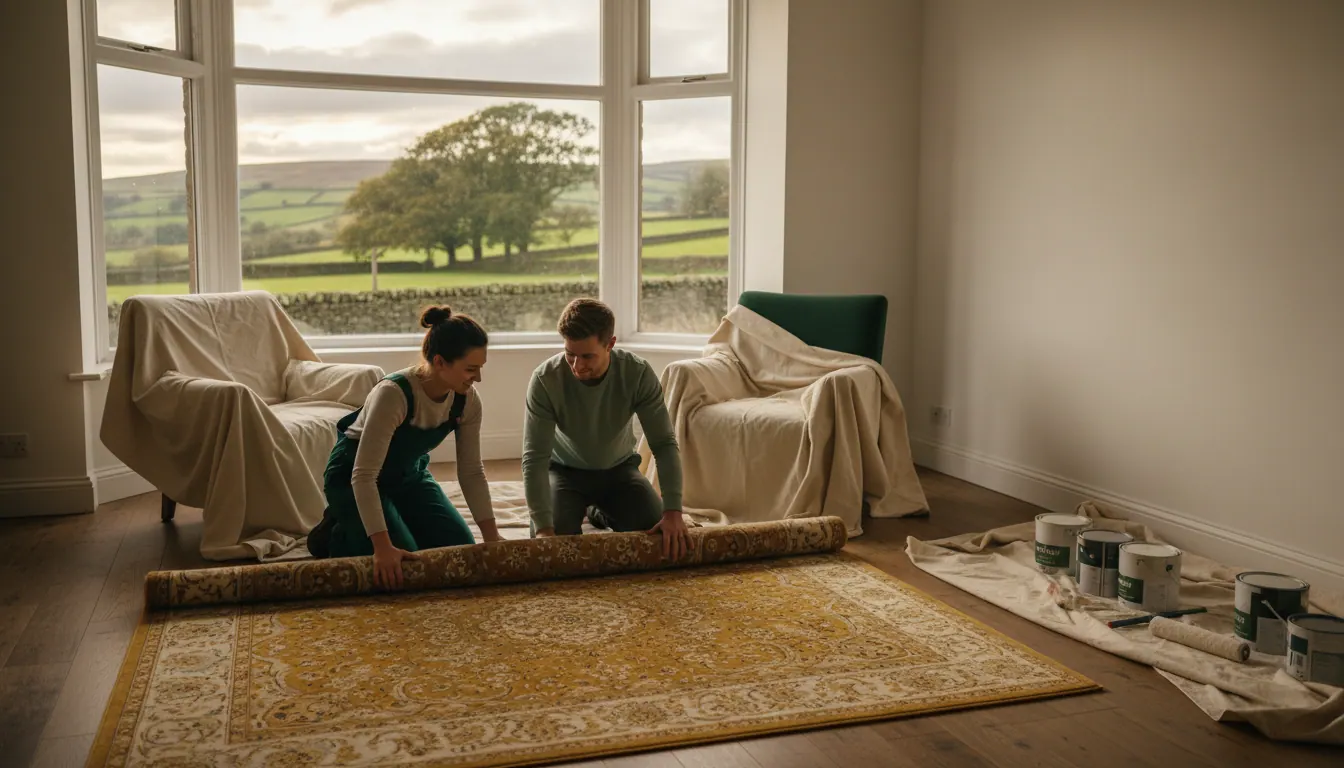
- Move furniture to the centre of the room or, better still, out entirely, and cover anything left with dust sheets.
- Remove switch plates, socket covers and any wall fixings you can safely take off. This gives a cleaner edge to work up to.
- Cover the floor and tape the dust sheets down at the skirting line.
Cloth dust sheets are generally better than thin plastic ones, which can shift and bunch underfoot.
Wash the walls
Walls collect grease, dust and general grime, especially in hallways, kitchens and around light switches. Paint does not bond well to a dirty or greasy surface, so washing first is one of the simplest ways to help the finish last.
Use a sugar soap solution and a sponge or cloth, working from the bottom of the wall upward so dirty water does not run over cleaned areas. Rinse with clean water and let the wall dry fully before moving on.
Fill cracks, holes and dents
Once the walls are clean and dry, go over every surface in good light. A torch held at a low angle shows imperfections you might otherwise miss.
Fill nail holes, hairline cracks, dents and gaps, then sand the filled areas smooth once dry. Run your hand over the surface: if you can feel the repair, it will show through the paint.
If you notice cracks that keep returning, or walls that feel soft or damp, do not just fill and paint over them. Get the underlying cause assessed before decorating.
Sand and wipe down
Previously painted surfaces often have a sheen that reduces adhesion. A light sand across the whole surface gives the new paint something to grip. Afterwards, wipe the dust away with a slightly damp cloth and let the surface dry. Dust trapped under fresh paint creates a rough texture that extra coats will not fix.
Prime where needed
Priming is not always needed, but it helps in certain situations, such as fresh plaster, filled areas, bare surfaces and walls going from a very dark colour to a light one. The right primer depends on the surface, so ask your decorator for advice.
Tape, protect and ventilate
Masking tape along ceilings, skirting boards, window frames and architraves gives a clean edge, but only if it is pressed down firmly. Remove it while the paint is still slightly tacky, pulling back at a low angle.
Good ventilation helps paint dry, but a strong draught across wet paint can cause uneven drying. Allow plenty of time for each stage to dry fully before moving on.
Common mistakes
- Skipping the wash. Grease and dust break the bond between paint and surface.
- Rushing drying times. Every stage needs to be fully dry before the next.
- Using too little paint. Thin coats can look patchy.
- Ignoring the sheen level. Matt, satin and gloss behave differently and suit different surfaces.
- Not protecting the floor. Cover and tape everything before you start.
After removing wallpaper
Removing wallpaper can leave paste residue, tears and raised seams. Wash the walls to remove all paste, let them dry, fill any damage, sand smooth and prime before painting. Take your time with this stage, because poorly prepared walls are a common cause of disappointing results.
Frequently asked questions
Is it necessary to wash walls before painting? It is strongly recommended. Paint needs a clean surface to bond to, and grease and grime can cause peeling or flaking.
How do I smooth uneven walls before painting? Fill holes and cracks, let the filler dry, then sand flush. If the surface is generally rough or damaged, you may need further work before decorating, so get advice on the best approach.
What are the most common preparation mistakes? Rushing drying times, skipping the wash, under-filling cracks and not sanding the surface. Any one of these can compromise the finish.
How long should I leave walls to dry? It depends on the room and conditions. Walls should feel completely dry, with no cool or damp patches, before any paint or primer goes on.
Ready to get started?
If you would like help with the preparation and decorating, or you simply want to talk through what a room needs, get in touch or call 07818 234913 to arrange a quote. Exquisite Detail Decorating Services serves West Yorkshire and surrounding areas. You can also read about painting and decorating and our ideas for hallway wall panelling.